
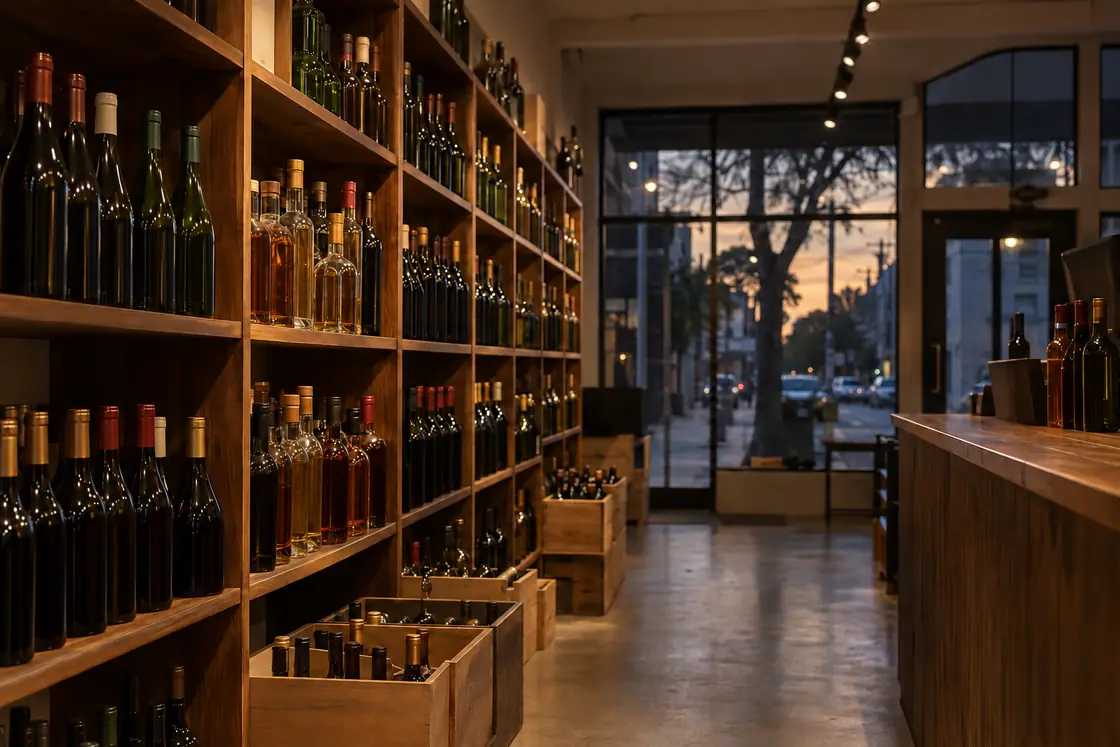
Packaged liquor licence in Victoria for bottle shops and retailers
We cover Victoria only.
A packaged liquor licence in Victoria lets a bottle shop sell sealed alcohol to take away.
At a glance
| Who it suits | Bottle shops and other retailers. |
|---|---|
| What it allows | Sealed takeaway sales and free tastings, not ordinary drinking at the shop. |
| Default trading hours | Until 11 pm; closed Good Friday and Christmas Day. |
| Floor space above 750 square metres | Community impact assessment required. |
| Newspaper advertising | Required for grants, variations and relocations, except prescribed variations. |
| Harm objections | Public and council harm grounds apply alongside amenity grounds. |
Trading hours and closed days
These are the defaults.
| Day | Default hours |
|---|---|
| Monday to Saturday | 9 am to 11 pm |
| Sunday | 10 am to 11 pm |
| ANZAC Day | Noon to 11 pm |
| Good Friday | Closed |
| Christmas Day | Closed |
Trading from 11 pm to 1 am, from 5 am, or on a closed day needs a determination under section 11. Liquor Control Victoria (LCV) says that takes exceptional circumstances.
Who holds one?
Bottle shops, supermarkets, gift shops, butchers, delis and small grocers. Compare the 12 types of liquor licence.
The 750 square metre line
A store over 750 square metres needs a community impact assessment under sections 27AA and 28(1)(ac), or section 29(3A) if a variation takes it over; one at exactly 750 does not.
Under section 44(2)(d), the Victorian Liquor Commission may refuse an application where the net economic and social impact harms local wellbeing.
The newspaper advert
Applications for a bottle shop licence, its variation or its relocation require a newspaper advert, except prescribed variations. Three steps, in order.
- Check whether the variation is excepted under section 35(1A).
- Arrange newspaper advertising under section 35(1).
- Complete it before the application is considered: section 35(5) requires the Commission to refuse consideration until advertising occurs.
The extra harm ground for objections
Public objectors and councils can argue that supply is conducive to or encouraging harm, alongside amenity grounds, under sections 38(1A) and 40(1A). This ground is not confined to outlets over 750 square metres.
Selling online and delivering
Notify the Commission before you start taking orders by phone, post or online (section 11(3)(ca)). Delivery stays within ordinary trading hours (section 11(3)(cc)). Under section 18C(2), the first order from any customer goes to that person with an age check. For same-day orders, section 109B requires you to give the driver written notice that the order must not be left unattended.
Compare a remote seller's packaged liquor licence in Victoria.
Places that generally cannot hold one
Petrol stations and convenience stores generally cannot. Section 22(2) provides a convenience-store exception for tourist or special needs areas.
Which sections of the Act apply?
The key sections of the Liquor Control Reform Act 1998 (Vic) are:
- Section 11: supply and hours.
- Sections 11(3)(ca), 11(3)(cc) and 18C: online sales and delivery.
- Section 22: restricted premises.
- Sections 27AA, 28(1)(ac) and 29(3A): community impact assessment.
- Section 35: newspaper advertising.
Transfers, timing and fees
For ownership changes, see liquor licence transfers. Internal review comes before Victorian Civil and Administrative Tribunal (VCAT) review: see VCAT reviews of liquor licence decisions.
LCV estimates about 9 to 11 weeks for a new licence, longer with objections; that is not our promise.
The application fee is non-refundable; annual renewal fees comprise a base fee plus risk fees, less any applicable star discount.
How we answer a harm objection to a bottle shop
You receive the objection's full details and can respond, so start there.
- Have the objection details supplied to you ready when you call.
- Our liquor licensing lawyer, Perry Q Wood, assesses them.
- We help you respond to a liquor licence objection.
Call 0429 948 138 or use the Liquor Licensing Victoria enquiry form.